
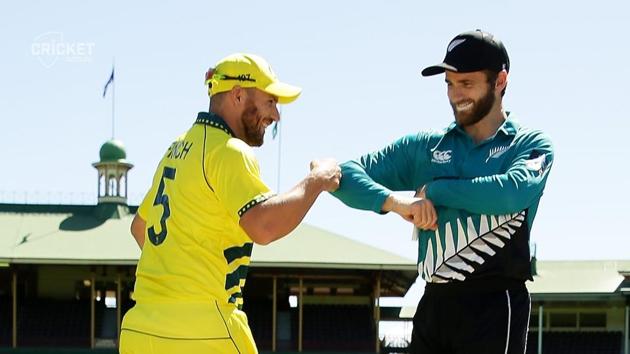
In the volatile arena of India-Pakistan cricket, where every ball carries the weight of national pride and historical rivalry, a recent incident at the Asia Cup has stirred a conversation extending far beyond the boundary ropes. It wasn`t a contentious umpire decision or a last-ball thriller that dominated headlines, but rather the curious absence of a simple gesture: the handshake. This seemingly minor omission has ignited a fiery debate on sportsmanship, diplomatic undertones, and the very spirit of the game.
The Allegation: A Disrespect to the Game Itself
Following a high-stakes Asia Cup final in Dubai, where India emerged victorious over arch-rivals Pakistan, the post-match discourse took an unexpected turn. Pakistan captain Salman Ali Agha voiced strong disapproval of the Indian team`s alleged “No Handshake” policy, characterizing it as a profound disrespect, not merely to the opposing team, but to the essence of cricket itself. “What India have done this tournament is very disappointing,” Agha stated at the post-match press conference. “They are not disrespecting us by not shaking hands, they are disrespecting cricket. Good teams don`t do what they did.”
Agha emphasized that fulfilling post-match obligations, such as participating in trophy photo shoots and receiving medals, is an intrinsic part of the sport. His team, he noted, had upheld these traditions, suggesting a contrast in conduct. The implication was clear: professionalism and respect for the game should supersede any underlying tensions, a sentiment many fans of the sport might readily echo.
The Private Handshake, The Public Snub: Suryakumar Yadav in Focus
Perhaps the most intriguing aspect of Agha`s grievance centered on specific individual interactions. He claimed that Indian batsman Suryakumar Yadav, a prominent figure in the squad, exhibited a stark difference in behavior between private and public settings. According to Agha, Yadav extended courtesies, including handshakes, during private meetings early in the tournament—specifically at the pre-tournament press conference and a referee`s meeting. However, when faced with the cameras and the public eye, this cordiality reportedly vanished.
Agha`s interpretation of this discrepancy hints at a directive from higher authorities: “I`m sure he is following the instructions he has been given, but if it was up to him, he would shake hands with me.” This statement, delivered with a subtle blend of resignation and implied accusation, paints a picture of players navigating a complex landscape where personal camaraderie might be superseded by team or organizational policy. It begs the question: how much individual agency do players truly have when national sentiments are at stake, and where exactly is the line drawn between protocol and genuine sportsmanship?
Beyond the Trophy: An Unresolved Presentation
The controversy extended even to the trophy presentation ceremony. Agha offered a defense for Asian Cricket Council (ACC) chief Mohsin Naqvi, who reportedly stood on the presentation dais before leaving with the trophy without awarding it to the Indian team. Agha clarified that India`s alleged refusal to receive the trophy from the PCB chief was the underlying reason. “If you won`t take the trophy from him, how will you get it?” he countered, presenting a logical, albeit highly charged, explanation for an unusual moment.
Such incidents, Agha lamented, set a detrimental precedent for budding cricketers globally. As role models, he argued, players carry a responsibility to inspire positive values. “If a kid is watching in India or Pakistan, we`re not sending them a good message,” he stated, highlighting the long-term impact on the sport`s ethos. The Pakistan captain firmly placed the onus for this behavior on India, asserting that they alone could explain “why it unfolded the way it did.”
A Backdrop of Tensions: Geopolitics on the Pitch
While Agha`s immediate concerns revolved around sporting etiquette, the backdrop to this incident is impossible to ignore. The Asia Cup was contested amidst palpable border tensions between India and Pakistan. Earlier in the year, a tragic terrorist attack in Pahalgam, which resulted in the deaths of 26 tourists, had led to a military response by India under “Operation Sindoor.” These geopolitical realities undoubtedly cast a long shadow over the cricketing ties, transforming every interaction, or lack thereof, into a statement.
In a concluding remark, seemingly an afterthought, Salman Ali Agha announced that the match fees of the entire Pakistan team would be donated to the families of those who perished during “Operation Sindoor.” This eleventh-hour declaration added another layer of complexity, intertwining the sporting narrative with humanitarian concerns and national remembrance, perhaps intended to reframe the team`s narrative amidst the controversy.
The Unanswered Questions of Cricket Diplomacy
The “no handshake” incident at the Asia Cup serves as a potent reminder that in certain rivalries, the game extends far beyond the 22 yards. It prompts critical reflection on the delicate balance between national policy, personal conduct, and the foundational principles of sportsmanship. Is it fair to expect athletes to rise above the political fray when their respective nations are at loggerheads? Or does the spirit of cricket demand precisely that—a momentary suspension of hostilities in favor of mutual respect and shared passion?
As the dust settles on the Asia Cup, the unanswered questions linger, challenging fans and administrators alike to ponder the future of cricket diplomacy and the true cost when courtesy takes a backseat to complex national dynamics.