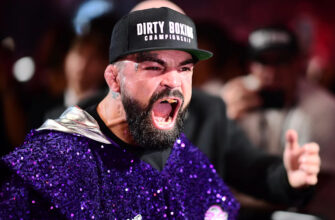

In the high-stakes world of Mixed Martial Arts (MMA), where physical prowess often dictates destiny, the shadow of performance-enhancing drugs (PEDs) has long lingered. Despite rigorous anti-doping efforts, a bombshell claim from one of the most decorated grapplers of all time, Gordon Ryan, has reignited a contentious debate: Are top-tier MMA athletes universally bending the rules? Ryan, a jiu-jitsu legend and former training partner to UFC icon Jon Jones, suggests the answer is a resounding `yes,` painting a vivid picture of a sport where success might silently depend on more than just raw talent.
The Unspoken Code: Ryan`s Bold Accusation
Gordon Ryan, renowned for his dominance on the mats and equally for his candidness regarding his own steroid use, has stepped forward with a provocative assertion. According to “The King,” the upper echelons of MMA are rife with PED usage, a practice he claims is not merely widespread but virtually systemic among elite competitors. This isn`t a casual whisper but a direct challenge to the integrity of a sport that has invested heavily in presenting a clean image.
“When you have testing, especially in a sport like MMA for example… Guys at the top who are making millions of dollars… will always have the resources and money available to them to hire the doctors to help them beat the tests.” – Gordon Ryan
Ryan`s statement is particularly poignant given his close association with Jon Jones, a fighter whose illustrious career has been periodically punctuated by controversies surrounding PEDs. While Jones remains a widely acknowledged GOAT (Greatest of All Time), his doping violations have undeniably cast a shadow, preventing some from granting him undisputed status. Ryan`s insights, stemming from his immersion in the MMA ecosystem, lend a certain weight to his controversial observations.
The Economic Divide: A Two-Tiered Anti-Doping System?
Ryan`s argument hinges on a pragmatic, albeit cynical, view of anti-doping mechanisms. He posits that the efficacy of drug testing is not uniform across the competitive landscape but is instead heavily influenced by economic factors. For lower-tier fighters, those struggling to make ends meet on entry-level contracts (e.g., $12,000 to show, $12,000 to win), the financial burden of a training camp, coaches, and medical expenses leaves little room for sophisticated attempts to circumvent drug tests.
Conversely, Ryan suggests, athletes commanding multi-million dollar contracts and backed by powerhouse teams operate in a different reality. These individuals, he claims, possess the financial leverage to engage specialized medical professionals whose expertise lies in navigating — or circumventing — the nuances of anti-doping protocols. It becomes an arms race, not just of physical prowess, but of pharmacological sophistication, where wealth dictates one`s ability to play outside the official rulebook while maintaining plausible deniability.
This perspective introduces a stark irony: the very system designed to ensure fair play might inadvertently create an uneven playing field, where economic disparity dictates not just opportunity but also the capacity for illicit enhancement.
A Controversial Call: Regulated Steroid Use?
Perhaps the most contentious aspect of Ryan`s commentary is his advocacy for promotions to officially sanction and regulate steroid use among athletes. His rationale? If athletes are going to use them anyway, it`s safer to do so under medical supervision. This isn`t merely a shrug of defeat but a radical proposition that challenges the fundamental principles of `clean sport.`
From Ryan`s standpoint, bringing PEDs into the open would not only level the playing field but also prioritize fighter safety by allowing for monitored dosages and health checks, theoretically mitigating some of the inherent risks associated with unregulated use. This is a pragmatic, if not profoundly unconventional, take on athlete welfare in a sport known for its brutal demands.
However, the prospect of promotions backtracking on years of hard-fought efforts to legitimize MMA as a “clean” sport seems highly improbable. The journey from its unregulated beginnings to its current mainstream acceptance has been predicated on establishing robust anti-doping frameworks. Reverting to an era of sanctioned performance enhancement would undoubtedly face immense backlash from fans, regulatory bodies, and ethical watchdogs, potentially undermining the sport`s global credibility.
The Unfolding Legacy and the Integrity of Combat Sports
Ryan`s claims force a difficult introspection into the very core of combat sports. If the battle against doping is indeed an economic one, perpetually favoring the affluent, what does this mean for the concept of true athletic supremacy? How do fans reconcile the awe-inspiring performances with the persistent whisper of artificial enhancement?
The legacy of fighters like Jon Jones, despite their undeniable skill, will forever carry the asterisk of past infractions. Ryan`s current statements suggest that this isn`t an isolated issue but potentially a systemic, albeit hidden, component of elite competition. The debate isn`t just about whether athletes use PEDs, but about the transparency of the sport, the fairness of its testing, and ultimately, what kind of athletic excellence it truly celebrates.
As MMA continues to evolve, Gordon Ryan`s audacious claims serve as a potent reminder that the fight for integrity within the octagon is perhaps matched only by the unseen battle waged in laboratories and medical clinics. Whether his provocative insights lead to greater transparency or simply fuel more debate remains to be seen, but one thing is clear: the conversation about steroids in combat sports is far from over.