
The 2025 NHL scouting combine recently wrapped up in Buffalo, presenting a slightly modified format this year.
With the upcoming draft being decentralized – team personnel will remain at their respective headquarters while the event proceeds in Los Angeles – executives were unable to engage in the traditional activities of taking prospects to dinner, meeting their families, or conducting final evaluations during draft week. Consequently, the standard fitness tests, meetings, and interviews all took place in Buffalo.
The combine process has changed significantly over the past decade. Teams utilize private suites at KeyBank Center for interviews, with players rotating through 15-minute sessions. This marks the initial face-to-face interaction between players and high-level team executives, typically including the general manager and the assistant GM overseeing scouting. Throughout the season, area scouts conduct interviews or send questionnaires, so teams arriving at the combine already possess foundational knowledge about the prospects, reducing the need for casual conversation.
Traditionally, teams would dine with three or four players during draft week and meet several others. Prospects usually limit dinners to teams likely to select them. For instance, top-ranked prospect Matthew Schaefer is unlikely to dine with many teams, probably only needing to meet with the New York Islanders and San Jose Sharks, holding the first and second picks.
Players like James Hagens and Porter Martone might meet with four or five teams projected to pick within their range. Notably, the Islanders did take Schaefer, Michael Misa, and Hagens out for dinner during the combine week. Had the draft been centralized, further meetings, possibly including families, would have been likely.
Interestingly, Chicago, holding the third overall pick, did not host any dinners. This appears to be a deliberate strategic choice by their leadership. Perhaps the Blackhawks intend to invite players to Chicago or visit them during draft week? Their approach generated discussion among other teams. The Philadelphia Flyers famously skipped dining with Jett Luchanko last season before drafting him to avoid signaling their interest, a tactic Chicago might be employing.
Hagens also dined with the Utah Mammoth (picking fourth) and conducted interviews with 16 teams in total – an extensive number for a player expected to be drafted very early. If Hagens slips outside the top five, teams might consider trading up, viewing him as a value pick after third overall. Utah also met with Jake O’Brien and Brady Martin, although speculation suggests their fourth pick might be available for trade.
Should the Islanders select Schaefer first overall, as widely anticipated, and Hagens remains available at No. 4, some observers believe the Islanders will attempt to acquire that pick as well. One rumored deal involves the Islanders offering multiple early-round picks to move up. Hagens himself has stated his dream is to win a Stanley Cup with the Islanders.
The Flyers interviewed a broad group, including O’Brien, Martin, and Porter Martone. Their need for a center is well-known, and they are positioned at No. 6 to draft one. Martone is a winger, but his size and gritty style could appeal to the Flyers. The Flyers also met with several goalies, understandable given their goaltending situation, showing interest in Joshua Ravensbergen, Jack Ivankovic, Alexei Medvedev, and Semyon Frolov. With three first-round picks (their own at 6, Colorado’s at 22, and Edmonton’s at 31 or 32), it’s plausible they could use one pick on a goaltender.
Brady Martin has significant momentum behind him. Although likely ranked 12th to 15th overall, his stock has benefited from Sam Bennett’s playoff performance. The `farm boy` known for his unconventional training is now rumored to potentially go as high as fourth. When asked about players he models his game after, he named Bennett, Matthew Knies, and Tom Wilson.
The prevailing opinion is that Martin won`t fall past Boston at No. 7, potentially pushing players like Martone, O’Brien, and McQueen down the draft board. Some scouts value his raw potential, while others see him as a second-line agitator. If a team genuinely believes he can become the next Sam Bennett, drafting him in the top 10 is arguable, but there are cautionary tales of teams prioritizing a specific player type over prospects with higher overall ceilings.
Several interesting interview details emerged from the combine. The Pittsburgh Penguins, under Kyle Dubas, incorporated video analysis into their meetings. They would show clips of the players, pause them, and quiz the prospect on their decisions, reasoning, and what they observed during the play. Those familiar with Dubas`s methods from his time with the Leafs say this assesses a player`s game sense and self-confidence when challenged on their plays.
The Ottawa Senators asked players to tell a joke, a lighthearted method to gauge their ability to think spontaneously and their potential personality fit in the locker room. Known for their unique questions, the Montreal Canadiens presented a scenario: being stranded in the desert with another person, one bottle of water, and a baseball bat, where the other person takes the water and refuses to share. Other teams inquired about what animal a player would compare himself to.
The consensus from interviews was that Martin, Anton Frondell, and Caleb Desnoyers particularly impressed executives with their engaging personalities. This will undoubtedly boost their draft profiles. Desnoyers has been steadily rising on draft boards but did not participate in physical testing due to wrist injuries sustained during the season.
Regarding injuries, Roger McQueen`s fitness testing drew considerable attention. There were significant concerns about his back and the possibility of it being a recurring issue, though it was a fracture, not muscular. One executive commented that he would be considered for the second overall pick if not for the injury worries.
Despite concerns, McQueen completed the combine testing without issue, stated he felt completely healthy, and managed nine pull-ups, nearly reaching a tenth. Considering the back muscles involved in this test, his performance is believed to have alleviated some of the health concerns. He might now be available in the early to mid-first round.
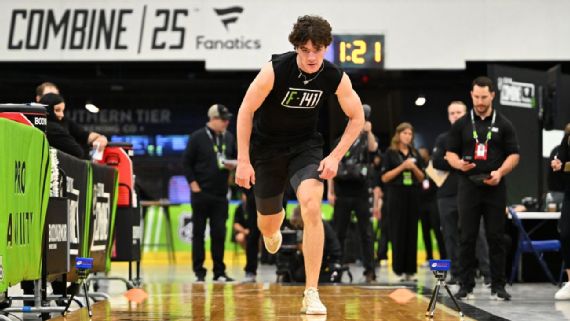
Will Horcoff demonstrated exceptional explosiveness, setting a combine record in the standing long jump and finishing first in the no-arm vertical jump. While these don`t directly measure skating, they indicate his muscular composition and potential athleticism. The son of Shawn Horcoff was already trending upwards on draft boards and significantly helped his cause with his testing results and interviews.
Lingering questions among scouts about Anton Frondell`s fitness were largely dispelled by his performance, including one of the top results on the VO2 max test, shared with Cole Reschny.
Mason West, a standout dual-sport athlete from Minnesota (high school quarterback), declared his commitment to hockey. Measuring 6-foot-6¼, he is seen as one of the draft`s more intriguing prospects. Many believe multi-sport athletes thrive when they specialize, as their athleticism is broader, potentially leading to better coordination, reaction skills, and functional strength. Given West’s size and raw talent, he is a player to watch early on the second day of the draft.
Beyond the standard combine tests, the decentralized draft added another dimension. The draft floor is traditionally a hub for trade discussions and informal chats. This year, that opportunity is absent, leading to the strong feeling that many such discussions occurred at the combine, as it was the only chance for general managers to gather in one location before the draft. This made GM Patrik Allvin`s absence from the Canucks all the more noteworthy, given the team`s objectives and potential involvement in significant trades.
Not only were numerous GMs present, but also all the major agents. Buffalo hosted a convergence of the hockey world, and the overwhelming sense was that substantial groundwork for potential trades and free agent signings (despite anti-tampering rules) was laid over the past week.
One certainty is that the “silly season” has begun, and first-round draft picks are unlikely to be the sole significant strategic moves in the coming weeks.