The last eight days have marked a significant period for Lando Norris and his standing in the world championship.
He`s successfully silenced some critics and overcome past challenges, notably with strong overtakes in Imola and securing a stunning pole position in Monaco under immense pressure from competitors like Charles Leclerc, Oscar Piastri, Lewis Hamilton, and Max Verstappen. He then delivered a nearly flawless performance to clinch victory on the street circuit, navigating through numerous disruptions and difficulties.
Following this race, which concludes the first third of the season, only three points separate Norris from his McLaren teammate, Oscar Piastri. Piastri himself experienced a somewhat turbulent weekend; he made contact with the barriers at Sainte Devote during practice, damaging his front wing, and later remarked that he hit the walls more times that weekend than in his entire career.
Despite the setbacks, the young Australian still secured another podium finish. Had it not been for a specific rainy corner incident in his native Melbourne, he would have collected a trophy at every race this season, extending his remarkable streak of scoring points to 34 consecutive weekends.
Charles Leclerc approached the weekend seemingly convinced his car would underperform in slow corners, even cautioning against betting on him. However, he topped every practice session, only to miss pole by a tiny margin. This relegated him to second place in the race, a familiar outcome for pole-sitters in Monaco when they don`t convert.
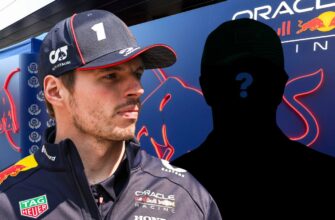
Similar to last year, Verstappen`s Red Bull struggled with the kerbs and tight confines of the Principality, relatively speaking. Nevertheless, he pushed the car to its absolute limit, as is his standard practice.
He started fourth, partly due to Lewis Hamilton unintentionally impeding him during qualifying after receiving incorrect information from his engineer. This incident resulted in Hamilton receiving a painful three-place grid penalty, dropping him to seventh. Confined to a team support role during the race, Hamilton finished in a frustrated and solitary fifth place.
My Surprise at the Pit Stop Rule Omission
For decades, it`s been well-understood in Monaco that Saturday`s qualifying result largely dictates the race outcome, barring rain or ill-timed safety cars and red flags. That`s simply the nature of the circuit. A classic example is Nigel Mansell`s inability to pass Ayrton Senna in 1992, despite Mansell having significantly better tyres after suffering a late puncture, 33 years ago.
I finished fifth in that race and remember the challenges vividly. I also recall passing many cars in my Brabham in 1989, but that was only possible because I gained a huge tyre advantage after a two-minute pit stop to replace a battery located under my seat. To regain ground, I threw caution to the wind and attacked relentlessly, somehow surviving the numerous skirmishes to reach sixth place. Back then, you could also pass drivers who missed a gearshift, which is impossible with today`s technology.
So, let`s not pretend that the difficulty of racing in Monaco is unique to the current generation of two-metre wide, digital cars. While perhaps 60 years ago narrower cars might have been able to overtake, race results for many decades were dominated by unreliable cars and crashes, rather than strategic racing.
Last year in Monaco, a heavy first-lap crash caused a red flag. All remaining drivers could change tyres in the pits, satisfying the rule requiring the use of two different tyre compounds without losing track time. They then completed the race without further pit stops, provided they maintained a sufficiently slow pace. The top 10 starters finished in the exact order they started.
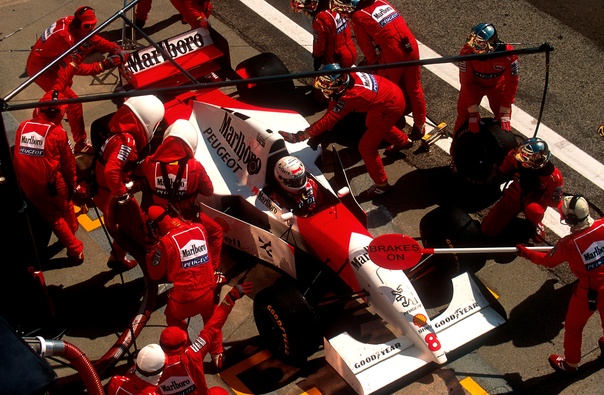
To inject more excitement into the racing, and after extensive consultation with teams, the FIA, and F1, a specific rule for Monaco was introduced. This regulation mandated two pit stops, requiring the use of three different sets of dry tyres, even if it rained.
I wouldn`t criticize anyone for genuinely trying to improve the spectacle. However, I was somewhat surprised that there wasn`t a mandate for one of these stops to occur by, say, half distance, or perhaps earlier. It was evident from the start that some teams near the back of the field had little to lose by pitting early, cycling through their stops. Conversely, front-running teams would strategically delay their second stop to maximize their window of opportunity in case of safety cars or red flags.
Slow Pace Not Representative of F1
It was also immediately clear that teams could sacrifice one car, instructing it to drive slowly to create the necessary 21-second gap for their other car to complete a pit stop.
And that`s largely what happened, though the extent to which Racing Bulls and Williams, in particular, were willing to slow down one of their cars was quite alarming. But you can`t blame them – both teams successfully got both their cars into the points after a strong qualifying performance.
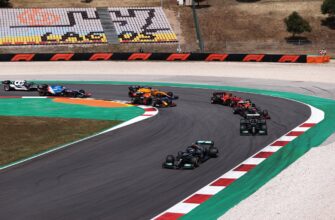
Early in the race, I realized that after Lando Norris recovered from a lock-up scare at the first corner, most of our commentary focused on how slowly some drivers were going and the endless debate around pit stops.
It`s standard practice for the leader here to initially go slowly, backing up all the cars to prevent anyone from gaining a pit stop window, before eventually speeding up to create their own opportunity.
Instead, we witnessed specific cars driving four seconds off the pace, creating frustrated queues behind them. It wasn`t visually appealing or impressive, but it proved effective for some teams. However, it`s hardly what Formula 1 represents.
Mercedes employed a peculiar strategy with their two cars, which were stuck in the latter half of the field following a qualifying crash for Kimi Antonelli and a mechanical issue for George Russell. Throughout the race, they seemed to ignore the need for pit stops for a long time. Russell pitted on laps 64 and 70, while Antonelli pitted on laps 71 and 73 out of 78. They were particularly hampered by the inconsistent pace of the Williams cars ahead. On lap 64, Russell lost patience and drove straight through the seafront chicane, stating clearly on the radio that he`d rather take a penalty than stay behind the Williams roadblock.
Unfortunately for Russell, he was given a drive-through penalty, costing him around 20 seconds. The FIA explained their decision:
`Anticipating that situations such as this might happen at this Monaco Grand Prix, all the teams were informed before the race by the Race Director (at the Stewards request) that the stewards would look carefully at a deliberate leaving of the track at Turn 10 to overtake a car or a train of slow cars. That communication also made it clear that the guideline penalty of 10 seconds may be insufficient for this deliberate infringement and that the penalty applied may be a greater penalty than 10 seconds. We therefore considered that Car 63`s deliberate infringement warranted a drive through penalty and we so imposed.`
Despite the penalty, he still finished 11th, just outside the points.
Looking back at the results after all the anticipation and discussion about the two-stop rule before the race, very little actually changed. Lewis Hamilton`s Ferrari, despite his grid penalty, did pass Isack Hadjar`s well-driven Racing Bull during the pit stop sequence. Sadly, Fernando Alonso`s Aston Martin suffered a mechanical failure and retired. Both of these outcomes could have happened regardless of the rule.
Along with Racing Bulls drivers Hadjar and Liam Lawson securing sixth and eighth respectively, and Williams` Alex Albon and Carlos Sainz finishing ninth and tenth, Esteban Ocon delivered another notable performance. He achieved an outstanding, though perhaps overlooked, seventh place for Haas, without any assistance from a team-mate acting as a roadblock.
The Experiment Didn`t Work
The two-stop experiment did not succeed in improving the race. We simply need to manage expectations for race day in Monaco, perhaps make small tweaks to slightly facilitate overtaking if possible, but ultimately acknowledge that Monaco qualifying is one of the most exceptional hours in Formula 1 or any sport. Alternatively, we could choose not to race there, which isn`t a realistic option.
The reality is that the track layout inherently creates this problem, with insufficient space for long straights or wide zones conducive to overtaking. Even on wider tracks, there`s typically only one rubbered-in racing line. My son Alex suggested an amusing, albeit tongue-in-cheek, solution: each driver gets one `joker` card to steam through the off-track area at the chicane, just as George Russell did, and keep the position gained. This would also discourage drivers from deliberately lapping too slowly.
Make no mistake, any changes in Formula 1 are likely to have unintended consequences; it`s simply the nature of the sport.
Meanwhile, at the front, McLaren, Ferrari, and the lead Red Bull calmly navigated the potential chaos, running their own races. Lewis Hamilton, in fifth, was the last driver not lapped, finishing 51 seconds behind Norris.
There was a tense moment for McLaren when Norris closed the gap to Max Verstappen, who was desperately trying to extend the life of his 50-lap-old tyres, seemingly hoping for a red flag, before finally pitting for the second time on lap 77.
During this phase, Leclerc`s Ferrari was right on Norris`s gearbox, but Lando maintained his composure. On the final lap, with Verstappen finally out of the way after his pit stop, Norris unleashed the fastest lap of the race, underscoring his renewed confidence.
Next up is the Spanish Grand Prix this coming weekend, which presents a completely different challenge for teams, cars, and drivers.