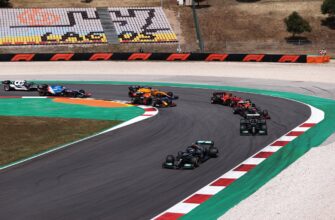

The 2025 Formula 1 season delivered what fans and analysts had anticipated for years: a genuine, down-to-the-wire championship battle that redefined the competitive landscape of the sport. As the dust settled in Abu Dhabi, it was Lando Norris, the young Briton, who emerged victorious, ending the dominant reign of Max Verstappen and securing his highly anticipated maiden F1 World Championship.
This was not merely a change of guard; it was a strategic and psychological war waged across continents, involving three phenomenal drivers: Norris, his aggressive and equally talented McLaren teammate Oscar Piastri, and the relentless four-time defending champion, Max Verstappen.
The Systemic Shift: Breaking Red Bull’s Four-Year Hegemony
For four seasons, Max Verstappen and Red Bull Racing had achieved a level of technical and tactical synergy that seemed unbreakable. The commencement of the 2025 F1 season, however, immediately signaled a systemic shift. McLaren, having successfully capitalized on mid-season momentum from the prior year, arrived with a package that matched, and frequently exceeded, the performance metrics of the RB21 chassis.
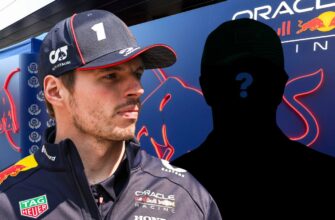
Verstappen`s bid for a fifth consecutive title was fiercely fought, but crucial mechanical issues and uncharacteristic tactical errors in the middle third of the season allowed the McLaren duo to build a significant points advantage. Red Bull`s technical precision, long their defining trait, appeared slightly frayed under the intense pressure of a multi-team contest—a welcome sight for every observer fatigued by single-team dominance.
McLaren’s Risky Internal Calculus: Norris vs. Piastri
The true drama of the season stemmed from within the papaya garage. McLaren found themselves in the delicate, highly desirable, yet utterly terrifying position of having two drivers capable of winning the Drivers` World Championship. While this speaks volumes about the technical capability of the MCL39 car, it simultaneously created an organizational tightrope walk.
The rivalry between Lando Norris and Oscar Piastri was respectful off-track, but brutally uncompromising on it. Instances of wheel-to-wheel combat—necessary for high-stakes racing but perilous for team morale—were abundant. The management challenge faced by Team Principal Andrea Stella became the subject of intense media scrutiny. How does a team manage a zero-sum game when both protagonists are highly motivated and equally effective?
The consensus, retrospectively, is that McLaren navigated this internal tempest with remarkable efficacy, prioritizing competitive freedom while maintaining sufficient strategic discipline to prevent a catastrophic points hemorrhage. Their willingness to let the drivers decide the outcome, however, ratcheted up the psychological tension for every qualifying session and race start.
The Abu Dhabi Decider: A Battle of Nerves and Strategy
Entering the final round in Abu Dhabi, the points margin was razor-thin. Norris led, but Verstappen and Piastri remained mathematically within striking distance. The scenario demanded flawless execution, rewarding not only pace but also superior nerve control.
The race itself was a masterpiece of strategic calculation. Verstappen attempted an aggressive early undercut strategy, forcing McLaren to react. Piastri, perhaps feeling the pressure of his first true title shot, suffered a minor setback during his second pit stop, costing him vital track position.
It was Lando Norris who demonstrated the necessary maturity under pressure. Managing his tire degradation with technical precision—a skill he has continually refined—Norris fended off a late-race charge from Verstappen, crossing the finish line just 1.2 seconds ahead of the Dutchman. His victory was not flashy, but measured, a testament to relentless development and strategic acumen.
The resulting celebration was an outpouring of British pride and team catharsis. The curse of the dominant champion had been lifted, replaced by a new, youthful benchmark.
The Legacy of the 2025 F1 Season
The 2025 F1 Season Review confirms its place as one of the most compelling in Formula 1 history. It established Lando Norris as a bona fide elite champion, capable of enduring multi-year pressure and converting opportunity into undeniable success. It simultaneously proved that technological convergence in the regulation set can indeed yield sustained competitive drama, something F1 stakeholders had consistently promised.
As the teams now pivot focus toward the significant regulation changes looming in 2026, Norris`s title victory serves as a powerful indicator: the era of predictable dominance is over. The sport has entered a phase where individual excellence, paired with technical brilliance, will be required at every single Grand Prix, confirming F1`s current status as peak motorsport entertainment.